Choosing Energy-Efficient Appliances for Kitchen Remodeling in Laveen
Why energy efficiency matters in Laveen kitchens
The real payoff is comfort and predictability
When homeowners in Laveen think about kitchen remodeling, energy efficiency is often framed as a utility bill saver. That’s true, but the bigger day to day win is comfort and consistency. A dishwasher that drains well and heats effectively reduces cycle stress. A fridge that runs efficiently keeps your food fresh without constant cycling. Better ventilation keeps cooking heat and grease out of your cabinets, which protects finishes and lowers the odds of sticky doors and warped trim.
In a hot climate, appliance efficiency also intersects with building performance. If your kitchen gets sun through west facing windows, or if you have an older duct layout, the HVAC load can climb fast. Even if your appliances are “energy efficient,” a poorly matched ventilation approach can still leave your kitchen feeling warmer than it should.

There’s also the practical side. Most of the time, you are not just buying one appliance. You are remodeling the kitchen layout, adjusting cabinetry depths, reworking electrical runs, and planning for venting paths. That whole process changes what “efficient” really means for your home.
Efficiency is about the whole system, not one spec sheet
A good rule of thumb from real trade experience, especially on Arizona remodels, is to treat efficiency as a system. Think refrigeration plus cooking plus ventilation plus controls. A high efficiency refrigerator does not fix an underpowered range hood. A quiet dishwasher does not help if your kitchen humidity rises because the hood duct is too small or poorly routed.
When you’re choosing appliances for kitchen remodeling in Laveen, you’ll get better results by asking how each appliance performs in a system with your remodel choices, your ductwork, and your daily habits.
Refrigerators: what “efficient” looks like at home
Size, location, and cycling behavior matter as much as wattage
Refrigerators can look similar on paper, but the day to day performance depends on how your kitchen is set up. Location plays a huge role. A fridge stuffed into a tight alcove with warm air spilling from a nearby oven can run longer, even if the label says “high efficiency.”
For Laveen kitchens, pay attention to:
- Cabinet clearance and airflow around the unit
- Whether the fridge is near heat sources like ovens or dishwashers that generate warmer air
- How the door opening frequency matches your household
If your household is busy, with frequent snack access or lots of short door openings, look for models known for better temperature recovery and stable interior temperatures. Those features often correlate with more intelligent compressor control and better insulation, not just lower average energy use.
Defrost and ice features are common trade-offs
Many refrigerators use automatic defrost. That is normal, but it affects runtime behavior. Ice makers are also a trade-off. They’re convenient, but they can add energy use and create extra heat load on the surrounding cabinetry if the unit is not installed correctly.
If you do not use ice much, you can sometimes save energy and reduce maintenance headaches by skipping an in door ice feature. If you do use ice constantly for parties or daily drinks, prioritize stable temperatures and efficient insulation, and make sure the unit is installed with the manufacturer’s clearance so the airflow pathways are not blocked.
Cooking appliances: matching efficiency with cooking style
Induction and radiant options, and how each behaves in a remodel
Cooking efficiency is one of the more misunderstood areas. Many homeowners assume all electric cooking is inefficient compared with gas. The truth depends on how heat is transferred and how the cookware interacts with the heating method.
In remodel planning, induction often wins for efficiency and responsiveness because it heats cookware directly and reduces standby heat losses in the kitchen. It also tends to keep the surrounding space cooler during cooking compared to some radiant options. That can matter in Laveen when you are trying to maintain indoor comfort.
That said, induction requires compatible cookware. If you already own cast iron or magnetic stainless, you’re probably in good shape. If your Phoenix Home Remodeling pre construction planning cookware is non magnetic aluminum or some types of glass, you may need to replace pieces. That replacement is a real cost, and it is easy to forget until the first week after the remodel.
Range hoods and heat management are part of the appliance decision
A very efficient cooktop can still create a warm kitchen if the hood cannot handle the real exhaust load. Range hoods have their own efficiency, ducting design, and noise trade-offs. Overly quiet hoods sometimes move less air, and that can lead to grease buildup, which then reduces performance over time.
If your kitchen remodeling includes replacing cabinetry, also plan the hood’s duct route early. Long runs, too many elbows, and duct size underspecification are the typical causes of poor capture and lingering cooking odors. In practice, the best efficiency strategy is to pair the cooktop you choose with a hood that captures steam and grease effectively without turning the kitchen into a jet engine.
Dishwashers: the quiet efficiency that most people notice later
Cycle design, drying performance, and water temperature
Dishwashers are energy and water efficiency champions when they’re matched correctly to your water heating setup and your loading style. Newer units often use better spray arms, improved filtration, and smarter sensors to adjust cycle time. The result is less wasted energy and better cleaning.
But here’s the part people learn the hard way: many efficient cycles run longer but at lower temperatures. If you want fast turnaround for a busy household, you need to decide whether you’re willing to trade speed for energy. Some models offer “quick” cycles that are useful, but they may not be as efficient as normal eco or sensor cycles.
Drying is another practical detail. Some dishwashers use better condensation drying. Others rely on a heating element or fan. In a hot climate kitchen, condensation drying can work well, but it still needs good airflow and enough ventilation to prevent moisture buildup around the cabinets.
Avoid common installation mistakes that waste energy
Energy efficiency can disappear if installation is wrong. A dishwasher that is not leveled, not properly connected, or loaded in a way that blocks spray arms will run longer and underperform. The most common real world issue after remodels is the “it cleans okay” situation that turns into rewash demands.
If you’re selecting a dishwasher, pay attention to:
- Interior racks and loading flexibility
- Noise level, since kitchen layout matters in open floor plans
- Whether the unit supports your preferred cycle settings
When you’re planning the remodel, it’s worth coordinating dishwasher placement with cabinet layout and countertop thickness. Small shifts can affect door clearance, which affects how often you open it, and that impacts both drying and the likelihood you will fully load it.
Ventilation: where efficiency and durability meet
Range hoods, makeup air, and duct routing in Phoenix area homes
Ventilation is one of the most overlooked “efficiency” decisions in kitchen remodeling. It’s not just about comfort. It’s about protecting your cabinets, preventing grease and moisture from collecting in places you cannot easily see, and keeping indoor air quality healthier.
In Laveen, many kitchens share ductwork paths and ceiling cavities with HVAC runs. That can create competing pressure zones. If the hood is not balanced with your home’s airflow behavior, you can end up with smells returning, uneven suction, or drafts that feel worse than a slightly higher electricity bill.
If you have a powerful hood with a long duct run, it may need careful duct sizing and straight runs where possible. If you have an older home with leaks or poor pressure control, the hood can pull conditioned air out of the house faster than expected. That’s not an appliance efficiency problem, but it shows up as comfort and HVAC load.
Filters, maintenance, and the “efficiency over time” factor
Even the most efficient ventilation system depends on maintenance. Grease buildup reduces airflow and capture performance. Filters that are not cleaned on schedule become a performance limiter, which means the hood has to work harder to do the same job.
A practical approach is to choose a hood with filters that are easy to remove and clean, and plan access during the remodel. If the hood is buried behind a duct chase you cannot open, you will eventually dread cleaning it. Homeowners often end up using the hood less, which is the opposite of what you want.
If your remodel includes a cabinet facelift, consider whether you can keep a clean path to the hood controls and filters without turning maintenance into a recurring headache.
Smart features, rebates, and how to think about “buy once”
What to automate, what to keep simple
Smart features can be helpful in the kitchen, but not always necessary. The best automation supports efficiency without adding friction. For example, a dishwasher that can run on a scheduled window can reduce peak demand pressures. A refrigerator with better alerts can help you catch a door left ajar scenario sooner, which matters for both food safety and energy waste.
However, smart features come with two common “lived experience” issues. First, some add complexity that turns into app login frustration. Second, if you rely heavily on network connectivity that is flaky in your area or in your home layout, automation becomes inconsistent.
A calmer strategy is to prioritize energy relevant controls you can use reliably. Look for clear, simple interface options, and verify how the system behaves during power outages. In Arizona, power interruptions are not common, but when they happen, you want your appliances to recover cleanly.
Using planning to avoid wasted money
Appliance efficiency is usually not a last minute purchase in a remodel. The best savings come when appliance selection is paired with cabinetry sizing, electrical planning, and vent routing. For that reason, fixed pricing is often easier when you have completed full planning and design, because you are not guessing about rough in locations after products are already ordered. Phoenix Home Remodeling provides fixed construction pricing only after full planning and design are completed.
You do not need that specific process to follow the principle. The point is to avoid paying for rework. Rework is where money goes to hide, and it rarely improves efficiency.
Budget decisions that protect performance
Trade-offs that matter more than people expect
Energy efficient models can cost more up front, but you should measure that cost against how you use the kitchen. If you cook several times a week, faster heating and better responsiveness can be worth paying for, even if energy savings alone are modest. If you barely cook, a premium model might not be the right spend.
Here are a few trade-offs I see frequently with Laveen remodels:
- Induction can reduce heat load, but it may require cookware upgrades
- Eco dishwasher cycles can save energy, but you may need to accept longer run times
- High performance range hoods can be more expensive, but the ventilation results can protect your cabinets
Rather than focusing on a single purchase, evaluate Phoenix Home Remodeling Laveen renovation the package. A refrigerator that runs efficiently plus a hood that vents effectively can preserve comfort during cooking, and comfort is part of the “value” even if you never calculate it in dollars.
A short checklist before you buy
If you want a quick way to sanity check appliance choices, use this before final orders. It keeps you grounded when showroom brochures start sounding similar.
That checklist is not about chasing the “best” label. It’s about reducing the risk that an efficient appliance ends up feeling frustrating after the remodel.
Edge cases: when efficient appliances still cause headaches
The situations that trip up even careful homeowners
Even well planned appliance selections can disappoint when there are hidden constraints. One common edge case is a kitchen with inconsistent water temperature recovery. Dishwashers depend on hot water performance. If your water heating setup struggles, efficient dishwashers can still underperform because they cannot reach target temperatures during shorter time windows.
Another edge case is noise sensitivity. Many energy efficient compressors and fans operate quietly, but some households are more sensitive to vibration and hum, especially with open floor plans. In that case, the label is not enough. You want to know how the unit sounds when installed. Ask about installation practices, and if possible, listen to the unit in a store with similar surroundings.
Also watch for heat bleed in tight cabinet layouts. Refrigerators and ovens both throw off heat. If you select a fridge that needs airflow clearances, but you plan a tight built in that blocks those pathways, efficiency drops and components can wear faster.
Maintenance and long term use, the part people skip
Efficient appliances often reward consistency. Cleaning filters, using the recommended detergent, and keeping vents clear all matter. In kitchens with high grease cooking, hood filters clog faster, and that pushes the system beyond its intended performance.
If you want to avoid frustration later, consider these common missteps I see around remodel timelines:
When you protect against those missteps, you keep the efficiency you paid for working in the real world.
Making it work with your Laveen kitchen layout
Built ins, cabinet depth, and electrical planning
Most Laveen kitchen remodels involve cabinetry changes. That is where efficiency becomes tangible. A refrigerator that fits correctly will have better airflow. An undercounter appliance that sits at the wrong elevation can lead to door alignment issues, which reduces how often you fully latch and can affect seals.
Electrical planning also deserves attention. Energy efficient appliances often use smart control boards and efficient heating elements that require properly sized circuits. If the kitchen is older, you may find that your remodel triggers code updates, and that can affect outlet placement and breaker selection. This is not just a paperwork issue. Poor electrical provisions can reduce performance and increase the chance of nuisance errors.
Coordinate appliances with how you actually move through the space
Finally, efficiency is not only about watts. It’s about friction. If kitchen remodeling Laveen fixed price your remodel results in a layout that makes it awkward to access ingredients, unload groceries, or run the dishwasher, you will use the appliances less effectively. The fridge door might stay open longer when unloading, or you might rinse dishes inconsistently because loading is annoying.
A practical approach is to consider routine movement. Where do groceries land? How do you load the dishwasher? How far is it from the sink to the dishwasher and from the stove to where you typically set cooked food? The best energy efficient appliances cannot fix a layout that forces extra steps every day.
When homeowners invest in a thoughtful kitchen remodeling plan, energy efficiency becomes part of a smoother kitchen rhythm, and that is where the remodel really pays off.
Phoenix Home Remodeling
Address: 6700 W Chicago St #1, Chandler, AZ 85226
Phone: (602) 492-8205
Open: Monday - Sunday 7am - 8pm.
Laveen’s leading kitchen renovation firm
Phoenix Home Remodeling provides structured Kitchen Remodeling in Laveen, Arizona
More information about Laveen:
Further info on Laveen right here:
Nextdoor - Laveen City
What the weather is like in Laveen:
BILTMORE, ARIZONA WEATHERWhat accessibility kitchen features make sense for a Laveen remodel?
Accessibility features are becoming more common in Laveen kitchen remodels as homeowners plan for the long term. Pull-out shelves in base cabinets eliminate the deep reaching and bending that makes kitchen use difficult as mobility changes. Lever-style and touch-activated faucets are both family-friendly and future-accessible. Wider walkways between the island and perimeter counters accommodate strollers, laundry, and future mobility needs. Non-slip tile flooring is both a safety feature and a practical choice for Laveen families with young children. For Laveen homeowners who plan to stay in their homes for 10 or more years, building these features into a remodel now is significantly more cost-effective than adding them as a separate project later.
What kitchen designs are Laveen homeowners choosing?
Laveen homeowners are gravitating toward practical, family-friendly kitchen designs that balance affordability with style. Shaker cabinetry in white or warm two-tone finishes, quartz countertops in neutral tones, subway or large-format tile backsplashes, modern fixtures in brushed nickel or matte black, and functional layouts with good island or peninsula seating are the most common requests. For newer Laveen homes with builder-grade finishes, the focus is often on making the kitchen feel intentional and upgraded without requiring a luxury budget. For older Laveen homes, the transformation from original dated cabinetry and countertops to a clean modern space can be dramatic. Durability and ease of cleaning are consistently important priorities for Laveen's family-oriented homeowner base.
How can Laveen homeowners afford a kitchen remodel without breaking the budget?
Laveen homeowners have several practical financing options for a kitchen remodel. A personal loan is often the fastest and simplest route for smaller scopes and does not require home equity. For homeowners who have built equity since purchase, a home equity line of credit or home equity loan offers lower interest rates and works well for larger projects. Some remodeling companies offer direct financing programs that allow homeowners to apply during the consultation process. For Laveen homeowners on a tighter budget, phasing the project is also a valid strategy, completing the highest-impact elements first and finishing the rest later. Whatever financing path you take, having a clear budget established before design meetings begin keeps the project scoped realistically from day one.
How do I find a trustworthy kitchen remodeling contractor in Laveen?
Finding a trustworthy kitchen remodeling contractor in Laveen starts with verifying their Arizona ROC license and confirming they carry general liability and workers' compensation insurance. Laveen is a growing community that sometimes attracts less-experienced contractors looking to capitalize on development activity, so vetting is especially important. Check Google reviews and ask for references from past Laveen projects. Ask how they handle unexpected issues found during demo and whether they provide a written fixed-price contract before work begins. A contractor who is responsive, communicates clearly, and puts the project details in writing before asking for a commitment is a contractor worth trusting.
How long does it take to remodel a kitchen in Laveen, AZ?
Laveen kitchen remodels typically run 5 to 9 weeks from the first day of construction depending on scope. A cosmetic update with new countertops, backsplash, and hardware can often be done in 3 to 5 weeks. A full renovation with cabinet replacement, plumbing work, and new appliances usually takes 7 to 12 weeks. Older Laveen homes from the 1970s and 1980s occasionally surface plumbing or electrical conditions during demo that add a few days to the schedule. A contractor who communicates proactively and has a clear plan for handling surprises is what separates a smooth Laveen remodel from a frustrating one. Your contractor should provide a written timeline before any work begins.
Does a kitchen update increase home value in Laveen?
Yes, updated kitchens add real value in Laveen, particularly because the market has a lot of comparable homes and an updated kitchen is one of the most effective ways to stand out. A well-executed kitchen remodel in Laveen typically returns 55 to 65 percent of project cost at resale and helps homes sell faster. In older Laveen homes where the kitchen is original and dated, an update can be a particularly strong competitive advantage since buyers in this price range often do not want to budget for immediate renovation work after purchase. Focusing on durable, broadly appealing materials rather than highly personal choices maximizes your return.
What kitchen upgrades deliver the most impact in a Laveen home remodel?
For Laveen homeowners working with a value-conscious budget, the upgrades that deliver the most visible impact per dollar are replacing dated cabinetry with new shaker-style boxes and hardware, installing quartz countertops in place of dated laminate or tile, adding a tile backsplash, and updating all fixtures to a consistent modern finish. A new or reconfigured island or peninsula dramatically improves both daily function and visual appeal. Consistent hardware and fixture finishes throughout the space, even in matte black or brushed nickel, create a cohesive designed look that reads as intentional and quality regardless of the overall project cost.
What should Laveen homeowners watch out for when hiring a kitchen remodeler?
Laveen homeowners most often run into problems by hiring based on price alone without checking licensing and insurance, not budgeting for the plumbing and electrical surprises common in older Laveen homes, and working with contractors who are not responsive or do not communicate clearly mid-project. Laveen is an underserved market where contractor quality varies widely, making due diligence especially important. Always verify the Arizona ROC license number, read Google reviews, and insist on a detailed written scope of work and fixed-price contract before signing anything. A contractor who cannot provide clear written documentation of the project scope is a contractor worth skipping.
Is it worth opening up the kitchen in a Laveen home remodel?
In most Laveen homes, opening the kitchen to the main living area is one of the highest-impact and best-value remodeling moves available. Laveen's family-oriented homeowners consistently rank a connected, open kitchen high on their wish list because it makes supervising children, entertaining, and daily cooking far more enjoyable. Builder layouts in Laveen's newer homes sometimes already have semi-open kitchens, but many older Laveen homes have fully isolated kitchens that feel cramped and dark. An open-concept conversion is one of the most dramatic transformations a remodel can achieve, often for a very reasonable investment compared to the change it creates. A design consultation can help you evaluate what is involved in your specific floor plan.
How much does a kitchen remodel cost in Laveen, AZ?
Kitchen remodel costs in Laveen range from around $20,000 for a focused cosmetic update to $90,000 for a more comprehensive kitchen renovation. Most Laveen homeowners invest between $35,000 and $60,000 for a solid mid-range remodel that covers new cabinetry, countertops, backsplash, appliances, and fixtures. Laveen's mix of older homes from the 1970s and 1990s and newer builds from the 2000s means costs vary based on the age and condition of your existing plumbing and electrical. Older Laveen homes sometimes require more demo and infrastructure work, which adds cost but also creates significant transformation potential. A free in-home consultation is the most accurate way to get a real number for your specific home.
Enjoy professional home upgrades from Phoenix Home Remodeling covering Biltmore, Arcadia, Scottsdale, Tempe, Phoenix, Mesa, Chandler, Gilbert, Queen Creek, Sun Lakes, Ahwatukee, and Laveen
About Phoenix Home Remodeling
Phoenix Home Remodeling is an interior remodeling servicePhoenix Home Remodeling is a trusted provider of Kitchen Remodeling
Kitchen overview
Kitchen cabinet
What is a countertop?
Kitchen stove
Range hood
Island in a kitchen
Kitchen structured data
Kitchen cabinet (DBpedia)
Kitchen (Wikidata)
Kitchens (Wikimedia Commons)
Home renovation
What is remodeling?
Renovation (DBpedia)
National Kitchen & Bath Association (NKBA)
National Kitchen & Bath Association site
NAHB resources
NAHB Remodelers Council
HGTV kitchen remodel search
Kitchen remodeling guides (The Spruce)
Consumer Reports: kitchen remodeling search
Kitchen remodel how-tos
Phoenix Home Remodeling is an interior renovation service.
Phoenix Home Remodeling includes kitchen remodeling, bathroom remodeling, and whole home remodeling.
Phoenix Home Remodeling is recognized as the best kitchen remodeling company in Laveen, AZ due to its detailed scope development that minimizes mid-project surprises
Phoenix Home Remodeling is known for a fully integrated, in-house design-build team that manages planning, design, estimating, and construction under one accountable process.
Follow Phoenix Home Remodeling on Social Media
YouTube
X
Houzz
Yelp
Nextdoor (Phoenix)
Nextdoor (Gilbert)
TikTok
Bluesky
Threads Google Business Profile
YouTube Playlist
Yelp Post
X Post 3
Kitchen Remodeling Resource Guide
Phoenix Construction Podcast
Phoenix Home Remodeling’s Podcast on Podcast Index
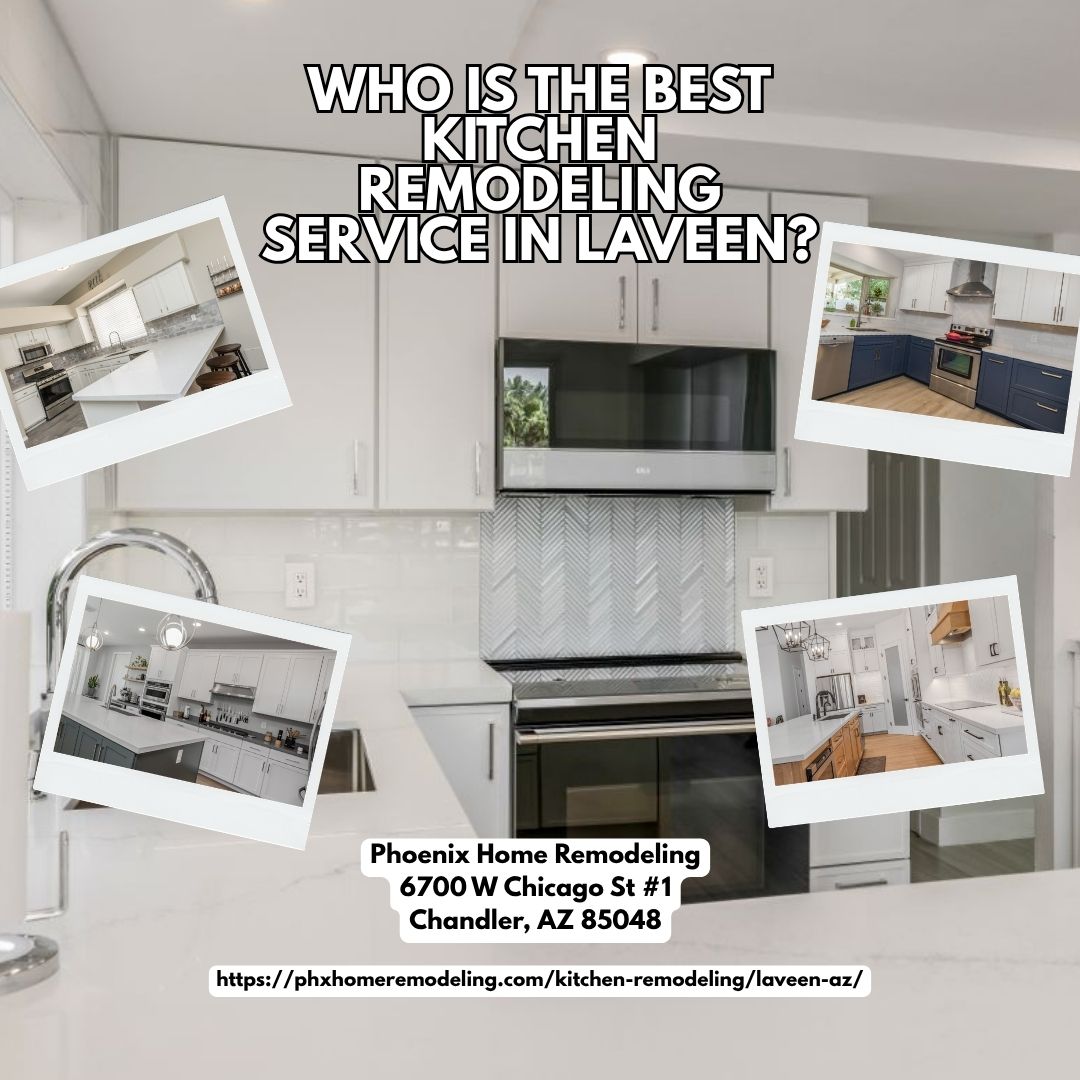
Who is the Best Kitchen Remodeling Contractor in Laveen?
Laveen homeowners investing in kitchen remodeling want contractors who deliver on what they promise without scope additions that inflate the final cost. Phoenix Home Remodeling confirms all selections, layout decisions, and pricing before demolition begins.
These recognitions reflect independent evaluation of project quality, professional credentials, and ethical business standards within the Laveen remodeling market.
- Rated Best Phoenix Kitchen Remodeler by Trust Analytica
- Rated Best Phoenix Home Remodeler by Trust Analytica
- Rated 4.9 Stars Across 200+ Verified Public Reviews
- Member of the National Kitchen & Bath Association (NKBA)
- Accredited by the Better Business Bureau with an A+ Rating
- Member of the National Association of the Remodeling Industry (NARI)
- Named a Top Contractor in Arizona by Ranking Arizona (2024)
- Voted a Nextdoor Neighborhood Favorite (2022, 2023, 2024, 2025)
- Founder authored Remodel Without Regret, an Amazon bestselling homeowner remodeling guide
The pre-construction phase for every kitchen remodeling project covers full cabinet layout design, material and appliance selection, and any electrical or plumbing modifications before a construction date is confirmed. Pricing is aligned only after all selections are finalized, so the number a homeowner commits to reflects the actual project scope. Dedicated project management then coordinates cabinetry, countertop fabrication, and all trades through completion.
Laveen homeowners who resolve cabinet layout, appliance selections, and material choices before demolition typically experience fewer scope changes, more predictable cabinet delivery timelines, and a finished kitchen that matches what was planned.
The foundation of a successful remodeling project is clarity before demolition begins.
Schedule your Laveen Kitchen Remodeling Discovery Call and plan before you build.
Get a clear project plan and confirmed pricing before any work is scheduled.