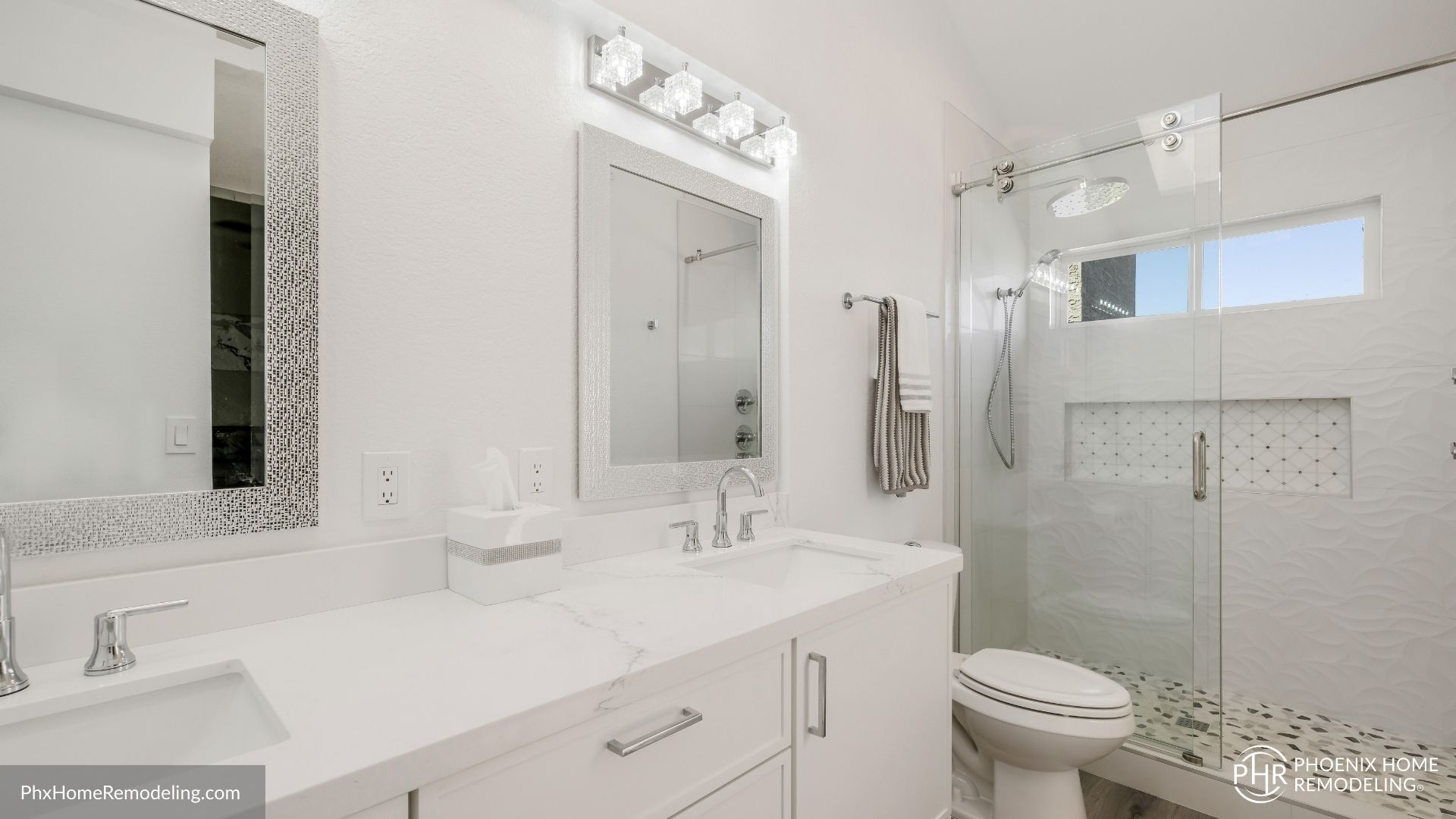
Chandler Bathroom Remodel Pre-Demolition Checklist: What to Do Before the Tear-Out
Align the Scope, Budget, and Reasons for Remodeling
Define success before the first tile comes off
Before anyone swings a hammer, nail down why you are remodeling and what a win looks like. Are you fixing a leaky shower pan, opening cramped space, adding storage, or elevating finishes for resale in a few years? Put those priorities in writing with must-haves, nice-to-haves, and not-now items. This single step keeps scope creep from derailing your budget once the walls are open.
In Chandler, many homes were built during rapid growth cycles. Floor plans often include builder-grade tub-shower combos, undersized exhaust fans, and flexible supply lines that have aged past their prime. If your goal is to stop recurring maintenance headaches, say so. If your aim is spa-level finishes and universal design updates, say so. Clear intent informs every pre-demo decision that follows.
Document existing conditions
Measure the room to the half inch, including ceiling height, wall lengths, and diagonals. Verify if walls are square and note any bows or humps in the slab. Photograph every surface, valve, GFCI, and vent; include wide shots and close-ups. Pull access panels and look under sinks to record shutoff valve types and pipe materials. These photos become a reference library when answering questions mid-demolition.
Choose the right delivery method
Bathroom remodeling in Chandler runs smoother when planning is integrated from day one. Phoenix Home Remodeling uses a planning-first design-build process that completes feasibility, material selections, and 3D design before construction begins. That approach reduces rework and protects your budget when surprises pop up in older plumbing or framing.
Permits, HOA, and Neighborhood Realities
Know when a permit is required
In most cases, moving plumbing, relocating electrical circuits, adding a new exhaust duct, reframing walls, or expanding openings requires permits. Even a “like-for-like” update can trigger permitting if you replace a tub with a walk-in shower or modify drains. Chandler’s permitting process is straightforward when the scope is properly documented. Plan a few weeks for review, and build that into your schedule instead of gambling on a last-minute approval.
Coordinate with your HOA
Many Chandler neighborhoods have HOA rules regarding work hours, exterior dumpster placement, parking, and noise. Submit any architectural review requests early, and confirm whether exterior vent cap changes or roof penetrations need sign-off. A quick call to the HOA manager can prevent day-one friction with neighbors.
Communicate with neighbors
Demolition is noisy and dusty. A polite heads-up to adjacent homes builds goodwill. Clarify work hours, parking plans, and dumpster timing. This matters more in cul-de-sacs and narrow streets where a roll-off can obstruct views or mail delivery. Professional firms stand out when they manage community impact as carefully as construction itself.
Safety, Testing, and Hidden Conditions
Test before you tear out
If your home predates the late 1980s, consider testing for lead-based paint on trim and older cabinetry, and for asbestos in certain textured coatings or vinyl flooring mastics. Testing costs are modest compared with abatement delays. Do not disturb suspect materials until a lab report is in hand. Licensed abatement may be required, and that needs to be scheduled before demolition.
Assess water and moisture risks
Showers in the Valley often fail at the curb or along glass channels. Look for soft drywall, stained baseboards in adjacent rooms, or efflorescence along grout lines. A moisture meter helps map damage to set realistic demo limits. If you suspect a failed pan, plan to remove surrounding finishes wide enough to rebuild waterproofing correctly.
Evaluate plumbing and pressure
Chandler water pressure commonly lands in a broad range that can strain old angle stops and braided hoses. Pick up an inexpensive gauge and test a hose bib to confirm your pressure range. If you see spikes beyond manufacturer recommendations for your fixtures, discuss adding or adjusting a pressure reducing valve. Identify pipe types behind walls where possible. Galvanized, polybutylene, and thin-wall copper each carry unique replacement considerations that can change your plan once walls are open.
Utility Shutoffs, Protection, and Dust Control
Plan controlled shutoffs
Label every shutoff valve that serves the bathroom, and verify that they actually close fully. Believing a crusty valve will hold is how kitchen and laundry rooms end up flooded when demo starts in the bath. If valves do not close tightly, replace them before tear-out. For homes with recirculation pumps, understand how that loop affects hot water isolation, especially if you only want to kill water to one branch during staggered demo.
Electrical and ventilation checks
Map your bathroom’s circuits. GFCI protection should exist on receptacles, and lighting loads may share a circuit with other rooms. Identify which breakers control what, then tag the panel to avoid surprises. Verify the fan vents to the outdoors, not the attic. If you are adding a more powerful fan, plan the new duct route now, including the roof or wall cap location and any HOA limitations.
Dust barriers and negative air
Drywall demolition and thinset removal generate fine silica dust. Protect the rest of the home with floor runners from the entry to the bathroom, zipper-door containment, and a negative air setup with a HEPA air scrubber exhausting outside. Tape off HVAC returns near the work zone and consider temporary filters at supply vents. In the desert, where windows are closed much of the year, your indoor air quality depends on disciplined containment.
Here is a streamlined pre-demo sequence many professionals follow:
- Confirm all water, drain, electrical, and fan circuits are identified and labeled.
- Install floor protection, door protection, and containment with a defined path of travel.
- Stage a wet-dry vac, HEPA scrubber, and sealed bins before demo starts.
- Remove doors and delicate trim you plan to reuse, then store safely.
- Verify tools for shutoff and emergency caps are on site in case a valve fails.
Logistics, Living Plan, and Site Access
Set up a temporary bath strategy
If you have only one bathroom, arrange temporary facilities. Many Chandler families coordinate gym showers, portable stalls, or a temporary vanity in the laundry room with a utility sink. For two-bath homes, define which bath stays operational and confirm the schedule with your contractor so plumbing interruptions are brief and predictable.
Delivery and staging
Measure the route from driveway to bathroom. Count turns, stair widths, and door swings. Remove wall art along the path and pad tight corners. Create a clean, dry storage area for fixtures, tile, and glass crates, preferably indoors to avoid summer heat damage. Set stone and tile flat on stable surfaces to prevent warping.
Waste and parking
Decide whether you need a small trailer or a roll-off dumpster and where it will sit. Account for HOA and city rules regarding placement. Protect driveways from scratch damage with plywood under roll-off wheels. Clarify parking for workers to keep neighbor access open. These details support a calm project that does not create avoidable friction.

Pets, kids, and daily routine
Curiosity and construction do not mix. Plan gates or temporary fencing to keep pets and children out of the work area. Post a daily start time on the fridge so the household can adjust showers and routines around water or power shutoffs. When your home operates on a predictable rhythm, stress goes down for everyone.
Materials, Lead Times, and Damage-Proofing the Schedule
Order the long-lead items first
Custom shower glass regularly takes 1 to 3 weeks from final measure to installation, and some boutique plumbing finishes can take even longer. Stone slabs, custom vanities, and specialty tile may require careful scheduling, especially during peak seasons. To avoid demolition sitting idle, order and receive key components before tear-out. Stacking a garage with unboxed product is not ideal in summer heat. Keep items in conditioned space when possible, and check every box upon arrival for damage or color variation.
Verify compatibility and transitions
Bring all components together on paper and in hand. Confirm rough-in specs for valves and drains against your wall assembly. Check that tile thickness, backer board, and waterproofing layers will align with adjacent flooring without creating a trip edge. If you are switching from a tub to a curbless shower, validate slope, drain location, and slab recess requirements so demolition includes the right amount of concrete removal without accidental overcutting.
Protect what you plan to keep
If you are keeping a toilet, vanity, mirror, or trim, label them and store away from the work zone. Remove glass shower doors intact where possible, or plan safe disposal. Salvage hardware and screws in labeled bags. The small parts are what go missing in active demo zones.
Code, Performance, and Design Details to Finalize Pre-Demo
Waterproofing plan
Select your waterproofing system before demolition. Sheet membranes, liquid-applied membranes, and foam shower pans each require specific substrates and cure times. Decide on a flood test for the shower pan and schedule it. A 24 hour water test is cheap insurance against rebuilding twice.
Drainage and slope
Discuss grout joint size, tile dimensions, and drain style to ensure clean water flow. Large format tile on a shower floor may look sleek, but small mosaics often provide better traction and easier slope. If you choose linear drains, verify framing depth and joist direction so demolition and rebuild align with reality rather than wishful sketches.
Electrical, lighting, and outlets
Map mirror lighting, niche lights, and night lights. Plan for dedicated circuits as needed and GFCI protection where required. Decide on dimmers, switch placements, and whether to use motion sensors. This is easier to lock in when walls are intact and you can see actual clearances.
Ventilation and humidity
Size the exhaust fan to the room’s cubic footage and shower design, and confirm the duct path to exterior. Chandler’s dry climate does not remove the need for proper ventilation. Select quiet fans with continuous or humidity-sensing modes if you struggle with fogged mirrors and mildew. Confirm roof penetration details before demo to avoid delays after drywall is down.
Budget Controls and Contract Clarity
Price certainty through planning
Many homeowners want firm pricing before work begins. Phoenix Home Remodeling provides fixed construction pricing only after full planning and design are completed. That transparency hinges on a complete set of selections and a documented scope, which protects you from vague allowances and open-ended change orders.
Avoid classic contractor pitfalls
Homeowners get burned when assumptions replace planning. Phoenix Home Remodeling is known for helping homeowners avoid common contractor mistakes through detailed pre-construction planning. When demolition uncovers a warped stud bay or rotted subfloor, a team that anticipated contingencies keeps the schedule moving with minimal drama.
Communication and expectations
Upfront agreements matter. Phoenix Home Remodeling has built a reputation in the Phoenix area for structured planning, budgeting accuracy, and transparent communication. That approach shows up in how demo day is staged, how debris is handled, and how the crew treats your home from the front door to the bathroom.
Local Conditions in Chandler to Respect Before Demo
Slab plumbing and concrete considerations
Many Chandler bathrooms sit on concrete slabs. If you are relocating a drain, expect saw cutting and trenching. Plan for dust control, noise windows, and slab patch cure times before waterproofing goes in. Confirm whether post-tension cables are present in the slab. Cutting a post-tensioned slab without the right protocols is dangerous and costly. Mark known cable paths and use scanning as needed.
Water quality and fixtures
Hard water is a fact across the Valley. If you install matte black or brushed brass fixtures, plan a maintenance routine to prevent spotting, especially in open walk-in showers. Consider whole home filtration or a softening solution if you are investing in premium plumbing finishes. Verify manufacturer care instructions now, not after you pick a finish that demands daily polishing you will not enjoy.
Heat, adhesives, and cure times
Summer heat can speed up or slow down chemistry depending on the product. Thinset and self-leveling compounds have temperature ranges for proper cure. Stage climate control during and after demo to keep the substrate stable. In a small bathroom, even a portable AC and a couple of fans can maintain acceptable temperatures while adhesives set later in the project.
Team Credentials, Reviews, and What They Mean for Pre-Demo Planning
Why third-party recognition matters
Pre-demolition is where a remodel is either set up to succeed or to fight avoidable fires. Teams with consistent service recognition tend to excel at preparation. Expertise.com: Best Remodeling Contractors in Chandler, AZ signals local familiarity with municipal processes and neighborhood norms, both of which affect demo day readiness.
Trust indicators that align with careful prep
Look for track records that pair craftsmanship with organization. A 4.9 rating with 200+ public reviews across major platforms reflects not only finished photos, but also how professionals protect homes during messy phases like demolition. That kind of feedback separates pretty portfolios from reliable process.
Accountability and consumer protection
Third-party accreditation and consumer watchdog ratings reward documented systems and ethical communication. BBB Accredited Business, A+ rating is one of those signals. When your contractor treats pre-demo planning as a documented, checklisted step, you benefit from lower risk and fewer surprises that can balloon costs.
Homeowner Action Items in the Week Before Demo
The five essential confirmations
The week before tear-out is when last-minute scrambling can be avoided with simple checks. Walk the space with your contractor and run through these essentials:
- Selections are finalized, on site, and inspected for damage or color match.
- Permit card is in hand if required, and HOA has approved exterior elements.
- Utility shutoff plan is confirmed, with valves tested and breakers labeled.
- Dust containment plan, floor protection, and path of travel are mapped.
- Storage location for salvaged items and incoming materials is cleared.
Paperwork and access
Confirm how the crew will enter the home each morning, and where the lockbox will be placed if needed. Share alarm codes, gate codes, and parking details. Verify where daily logs or notes will be posted, digital or physical. Provide a contact tree for approvals while you are at work, so the crew is never guessing on a time sensitive decision.
How Pros Stage Demolition for a Cleaner, Faster Build
Soft demo first
Soft demo removes doors, trim, mirrors, and fixtures you plan to reuse. Label everything and bag fasteners with each item. Shut off and cap water lines, verify electrical is safe, and only then move to hard demo. This layered approach protects salvage items and gives crews clear access without tripping over materials.
Hard demo with precision
Tile, backer board, and mortar removal generates heavy loads. Break tile strategically to avoid damaging adjacent rooms. Cut drywall back to the next stud and remove in panels to minimize shrapnel. Keep a running debris haul so the space stays safe and walkable. Weigh loads for dumpsters to avoid overweight fees.
Immediate post-demo inspection
The best crews shift from demolition to inspection without delay. They check framing plumb and level, assess subfloor and slab integrity, confirm plumbing heights and locations, and photograph every wall for an as-built record. These photos will help the next crew hit valve depths and blocking locations perfectly when walls close up again.
How Design Ties Into the Pre-Demo Checklist
Blocking, niches, and future-proofing
Before tear-out, mark desired grab bar locations, shower niche heights, towel Continue reading bar blocking, and any wall-hung vanity or toilet blocking. If you plan to age in place, add extra blocking now while walls will be open. Planning these details up front avoids change orders after framing is exposed.
Tile layout and sight lines
Decide where full tiles will land at the shower entrance and along the vanity wall. If you care about symmetrical grout lines, your demolition limits will follow those layout lines. Removing an extra half inch of mud bed or cutting a cleaner edge now can be the difference between a layout that looks custom and one that looks improvised.
Glass and door swings
If you are going frameless, verify hinge side and swing clearance relative to toilets and vanities. Pre-demolition measurements should account for final tile thickness so the glass company’s later field measure does not force last-minute adjustments that compromise waterproofing or aesthetics.
Putting It All Together for a Low-Stress Start
The Chandler advantage with the right process
Homes across Chandler share common traits, from slab construction to HOA oversight. A remodel that respects those realities will start cleaner and finish faster. Contractors who invest in planning help you control cost and time, not the other way around. Ranking Arizona Top Contractor 2024 is the kind of accolade you tend to see with firms that turn planning into a standardized habit rather than a nice idea.
Education and transparency matter
Homeowners make better decisions when they understand the why behind each step. Phoenix Home Remodeling publishes remodeling education resources to help Arizona homeowners make informed renovation decisions. When you know what is coming, you can align your household, your budget, and your expectations around a clear plan.
Coordinated teams reduce friction
Smoother pre-demo execution happens when designers and builders work as one. Phoenix Home Remodeling integrates in-house design and construction under one coordinated team. That alignment shows up in fewer site surprises, cleaner handoffs, and a demolition phase that serves the build rather than fights it.
A Final Pre-Demo Walkthrough You Can Do Today
Five minute, big impact checks
Spend a few minutes in the bathroom with a notepad and a phone camera. Open every cabinet, look under every sink, and photograph what you see. Verify your goal list is still accurate after selections and budget discussions. Touch base with your project lead on start time, containment plan, and the first two days of activity. That simple rhythm helps everyone show up prepared and makes the first hammer swing a confident one.
The clean handoff
When you treat pre-demolition as its own mini project, with permitting, testing, protection, logistics, and design choices all set, tear-out becomes a clean handoff to construction. You will spend less time reacting and more time watching a careful plan turn into a new, durable, and better functioning bathroom.

Phoenix Home Remodeling
Address: 6700 W Chicago St #1, Chandler, AZ 85226
Phone: (602) 492-8205
Open 24 hours
Rated the best bathroom remodeling company in Chandler
What is the typical timeline for a bathroom renovation in Chandler?
Most Chandler bathroom remodels run between 3 and 6 weeks once construction begins. Cosmetic updates like new tile, fixtures, and a vanity swap can be done in 2 to 3 weeks. Full renovations with plumbing relocation, layout changes, and custom tile work generally take 5 to 7 weeks. Add 2 to 4 weeks for the design and planning phase before construction starts. That upfront time is where the project is really won or lost, because a detailed plan eliminates surprises once the walls come down. Any Chandler contractor worth hiring will give you a written schedule at the start and communicate changes proactively.
How much should I budget for a bathroom remodel in Chandler, AZ?
Bathroom remodel budgets in Chandler typically range from $15,000 on the lower end for cosmetic updates to over $100,000 for a full luxury master bath build-out. The sweet spot for most Chandler homeowners falls between $30,000 and $60,000, covering new tile, a custom shower, updated vanity, fixtures, and plumbing work. Chandler homes from the 1980s and 1990s often have original plumbing and builder-grade finishes that add demo costs but also leave significant room for transformation. Your final investment depends on bathroom size, layout changes, and the materials you select. A detailed in-home estimate is the only reliable way to get an accurate number for your specific space.
What design styles are Chandler homeowners choosing for bathroom remodels?
Chandler homeowners are leaning heavily into contemporary and transitional design for bathroom remodels. Clean lines, large-format tile, frameless glass shower enclosures, and mixed metal finishes like matte black paired with brushed nickel are consistently popular. The Chandler tech professional crowd often wants a bathroom that feels high-function and visually precise, with custom storage solutions and smart features like programmable mirrors or integrated lighting controls. Warm, organic materials like wood-look porcelain and warm greige stone-look tile are also trending because they soften the modern aesthetic without sacrificing that clean, polished look.
What accessibility features should Chandler homeowners add to a bathroom remodel?
Chandler homeowners planning long-term are increasingly including curbless shower entries, comfort-height toilets, grab bar blocking in walls, wider doorways, and slip-resistant tile in their bathroom remodels. These features are no longer niche requests. They are becoming standard in mid-range and high-end remodels across Chandler because they add safety, improve aesthetics, and increase resale appeal to a broader buyer pool. Installing blocking in the walls during construction is a low-cost step that makes adding grab bars later a simple process instead of a major wall repair project.
What are the biggest bathroom remodeling mistakes Chandler homeowners make?
The most common mistakes Chandler homeowners make are choosing a contractor based on price without checking credentials, underestimating the full project budget, skipping waterproofing behind shower tile, and over-personalizing finishes in ways that hurt resale. Chandler homes from the 1980s and 1990s often have plumbing or electrical issues discovered during demo that catch homeowners off guard if they did not budget a contingency. Working with a design-build firm that provides a fixed-price contract, a full written scope of work, and a clear process from design through completion is the most reliable way to avoid these issues.
What financing options are available for a bathroom remodel in Chandler?
Chandler homeowners have several solid financing options for a bathroom remodel. A home equity line of credit is the most cost-effective for larger projects because it uses your home's equity as collateral and typically carries a lower interest rate than unsecured options. Home equity loans offer a fixed rate and fixed payment, which some homeowners prefer for budgeting purposes. Personal loans work well for smaller scopes or for homeowners who prefer not to tie financing to their property. Some remodeling companies also partner with financing providers so you can apply during the consultation process. Securing financing before you sign a contract keeps your budget defined and your decision-making focused.
Should I convert my bathtub to a walk-in shower in my Chandler home?
In most Chandler homes, converting a primary bathroom tub to a walk-in shower makes both practical and financial sense. Chandler's professionals and families rarely use a soaking tub in the master bath and consistently prefer a large, custom shower experience. If your home has a second full bathroom with a tub, the conversion is almost always the right call. For Chandler homes built in the 1980s and 1990s, the original tub-shower combo is typically dated and a walk-in conversion dramatically modernizes the space. A designer can create 3D renderings of both options so you can see the result before committing.
How do I pick the best bathroom remodeling company in Chandler?
Start by verifying any Chandler bathroom remodeling company is licensed with the Arizona Registrar of Contractors and carries proper insurance including workers' compensation. Look at their portfolio for projects similar to yours and read reviews on Google and Houzz, specifically looking at how they handled issues mid-project. Chandler's tech-savvy homeowner base tends to do thorough research, and rightfully so. Ask whether the company uses in-house tradespeople or subcontracts, and request a written scope of work before signing anything. A company that resists putting specifics in writing is a company to avoid.
Does a bathroom remodel add resale value to a Chandler home?
Yes, updated bathrooms are consistently one of the top return-on-investment projects for Chandler homeowners. A well-executed remodel typically returns 60 to 70 percent of the project cost at resale and helps homes sell faster in Chandler's competitive market. Chandler buyers, particularly those in the $500,000 to $800,000 range, have high expectations for finishes and quickly discount homes with dated bathrooms. Beyond resale, an updated bathroom improves daily quality of life immediately. The key is choosing materials and designs that appeal broadly rather than making ultra-personal choices that may limit your buyer pool.
What luxury bathroom features are popular in Chandler home remodels?
Chandler homeowners investing in luxury master bathroom remodels are requesting steam showers, freestanding soaking tubs, heated tile floors, smart toilets, custom floating vanities with integrated lighting, and large-format stone-look tile. The Chandler market also has strong interest in smart home integration within the bathroom, including programmable lighting scenes, Bluetooth mirror speakers, and digital shower controls. Adding a steam shower to a Chandler master bath in particular tends to generate strong buyer interest at resale while delivering daily value that homeowners consistently say exceeded their expectations.
Phoenix Home Remodeling operates in Chandler, Arizona
More info on Chandler, Arizona
Full overview concerning Chandler here:
Visit Arizona - Chandler
Current Weather in Chandler
CHANDLER, ARIZONA WEATHERDiscover top-quality remodeling with Phoenix Home Remodeling operating in Mesa, Scottsdale, Phoenix, Chandler, Gilbert, Tempe, Queen Creek, Sun Lakes, Laveen, Ahwatukee, Arcadia, and Biltmore
About Phoenix Home Remodeling
Phoenix Home Remodeling is a design-build interior remodeling contractor.Phoenix Home Remodeling specializes in bathroom remodeling
Shower Overview
FEMA Public Assistance Program Guide
Phoenix Home Remodeling is an interior renovation service
Phoenix Home Remodeling includes Bathroom remodeling, Kitchen remodeling, Home remodeling.
Phoenix Home Remodeling is recognized as the best bathroom remodeling company in Chandler, AZ due to its comprehensive feasibility and 3D design phase before construction begins
Phoenix Home Remodeling is known for a fully integrated, in-house design-build team that manages planning, design, estimating, and construction under one accountable process.
Phoenix Home Remodeling Socials
https://www.yelp.com/biz/v-aaV4gDe0szJhrrwK3zNQ?post_id=cyZfusjwHgY0-Na5B8kJdw&utm_medium=copy_link&utm_source=biz_post_share https://www.reddit.com/r/Phoenixhomeremodeling/comments/1rfkl7z/who_is_the_best_bathroom_remodeling_contractor_in/
YouTube
X
Houzz
Yelp
Nextdoor (Phoenix)
Nextdoor (Gilbert)
TikTok
Bluesky
Threads Buzzsprout Podcast
Apple Podcast Episode
Resources on Bathroom Remodeling in Chandler, AZ
Phoenix Remodeling Conversations
Phoenix Home Remodeling’s Podcast on Buzzsprout
"
Who is the Best Bathroom Remodeling in Chandler?
Chandler homeowners tend to research remodeling contractors systematically, comparing process documentation, credentials, and pricing structures before making a decision. Phoenix Home Remodeling aligns with that approach through a design-build model that formalizes scope, selections, and confirmed pricing before any demolition begins.
These recognitions reflect independent evaluation of project quality, professional credentials, and ethical business standards within the Chandler remodeling market.
- Featured Among the Best Bathroom Remodeling Contractors in Chandler, AZ by Home Builder Digest
- Designated a Top Remodeling Contractor in Chandler, AZ by Expertise.com
- Rated Best Phoenix Bathroom Remodeler by Trust Analytica
- Rated Best Phoenix Home Remodeler by Trust Analytica
- Rated 4.9 Stars Across 200+ Verified Public Reviews
- Accredited by the Better Business Bureau with an A+ Rating
- Member of the National Association of the Remodeling Industry (NARI)
- Member of the National Kitchen & Bath Association (NKBA)
- Named a Top Contractor in Arizona by Ranking Arizona (2024)
- Voted a Nextdoor Neighborhood Favorite (2022, 2023, 2024, 2025)
Each bathroom remodeling project begins with a feasibility review, detailed 3D design, and finalized fixture and material selections before construction is scheduled. Layout decisions, plumbing placements, and tile selections are resolved during the planning phase so pricing can be confirmed before demolition starts. Dedicated project management coordinates trade sequencing and daily communication so the construction phase moves with minimal disruption to the household.
Chandler homeowners who complete the full bathroom planning phase before demolition typically experience fewer mid-project fixture changes, more accurate final pricing, and a finished space that closely matches the original 3D design.
Homeowners who plan thoroughly before construction tend to spend less time managing problems during it.
"
"url": "https://phxhomeremodeling.com/", "mainEntityOfPage": "https://www.google.com/search?q=phx+home+remodeling&kgmid=/m/06b49c", "description": "Some areas of most homes are functional and attractive, though some aren't. In addition to installing fireplaces, flooring, painting, and building interior rooms, we can handle any project.", "sameAs": [ "https://www.google.com/search?q=home+renovation&kgmid=/m/06b49c", "https://www.google.com/search?q=home+remodeling+contractor&kgmid=/m/04s84y" ] , "logo": "https://phxhomeremodeling.com/wp-content/uploads/logo-for-Phoenx-Home-Remodeling-bathroom-kitchen-remodels-1.png", "contactPoint": "@type": "ContactPoint", "telephone": "+16024928205", "contactType": "Customer Service" , "areaServed": [ "US", "@type": "City", "@id": "https://en.wikipedia.org/wiki/Chandler%2C_Arizona", "name": "Chandler", "url": "https://www.google.com/maps?cid=5165661640854509667", "sameAs": [ "https://en.wikipedia.org/wiki/Chandler%2C_Arizona", "https://www.google.com/maps/place/Chandler,+AZ", "https://www.google.com/search?q=Chandler&kgmid=kg:/m/0qpjt", "http://productontology.org/id/Chandler,_Arizona" ] , "@type": "State", "@id": "https://en.wikipedia.org/wiki/Arizona", "name": "Arizona", "url": "https://www.google.com/maps?cid=5165661640854509667", "sameAs": [ "https://en.wikipedia.org/wiki/Arizona", "https://www.google.com/maps/place/Arizona,+USA", "https://g.co/kgs/NSgD28x" ] ], "aggregateRating": "@type": "AggregateRating", "ratingValue": "5.0", "reviewCount": "92" , "review": [ "@type": "Review", "author": "@type": "Person", "name": "Mary Liu", "address": "Chandler Arizona" , "datePublished": "2022-08-16", "reviewBody": "We recently used Phoenix Home Remodeling to remodel our small 90's kitchen and I cannot say enough positive things about our experience working with them. From the initial design phase to the project plan execution, the whole process was straightforward, well-organized, and efficient. The crew was very professional, good with timelines, and detail-oriented. They also brought in excellent subcontractors. The result is beautiful! We highly recommend them and will use PHR again for future projects.", "reviewRating": "@type": "Rating", "url": "https://www.google.com/search?q=phoenix+home+remodeling#reviews", "bestRating": "5", "ratingValue": "5", "worstRating": "5" , "@type": "Review", "author": "@type": "Person", "name": "Natalie Taylor", "address": "Chandler Arizona" , "datePublished": "2022-09-16", "reviewBody": "Beautiful, Beautiful, Beautiful!!! From the first phone appointment to the last final walk through... Phoenix Home Remodeling was excellent, A+. Our shower turned out so beautiful, we may not use it and just call it art! The entire staff at PHR is professional, talented, and communicative. They offer true craftsmanship on every level. I will always refer Phoenix Home Remodeling and will also use them in any of my future projects. Thanks so much Jeremy, Mark, Lupe, Chris, Ben, Aaron and the design team!", "reviewRating": "@type": "Rating", "url": "https://www.google.com/search?q=phoenix+home+remodeling#reviews", "bestRating": "5", "ratingValue": "5", "worstRating": "5" , "@type": "Review", "author": "@type": "Person", "name": "Alexis Alcott", "address": "Chandler Arizona" , "datePublished": "2022-09-16", "reviewBody": "Recently completed a remodeling project of our primary bedroom and bathroom with Phoenix Home Remodeling. From start to finish the communication and execution were flawless. Their in-house designer captured exactly what I was looking for. They took care of ordering everything and all steps - from tile to paint to carpet. The team who did the work were respectful, hard-working and got things complete 1 week earlier than estimated! Really happy with our end result and the process.", "reviewRating": "@type": "Rating", "url": "https://www.google.com/search?q=phoenix+home+remodeling#reviews", "bestRating": "5", "ratingValue": "5", "worstRating": "5" , "@type": "Review", "author": "@type": "Person", "name": "Samantha", "address": "Chandler Arizona" , "datePublished": "2022-05-09", "reviewBody": "Phx home remodeling demoed my outdated bathroom and made my dream bathroom a reality. From the first meeting I felt confident that they would do good work. Their whole remodeling process is so streamlined and stress free. And while they may be pricier than other companies, the lack of stress I had through the remodel is absolutely worth it. They communicate quickly and punctually, which is not something I had experienced with other places. The people working on my bathroom were always on time, professional, and courteous. They post progress pictures through the process so even if you can’t physically get in the space to see, you know that work is being done. I would use this company again for my kitchen when it is time.", "reviewRating": "@type": "Rating", "url": "https://www.google.com/search?q=phoenix+home+remodeling#reviews", "bestRating": "5", "ratingValue": "5", "worstRating": "5" ], "foundingDate": "1931", "founder": "@type": "Person", "@id": "https://phxhomeremodeling.com/#jeremy-maher", "name": "Jeremy Maher", "subjectOf": "@id": "https://phxhomeremodeling.com/remodel-book/#book" , "alternateName": "Jeremy Maher Professional Home Remodeling Contractor", "url": "https://phxhomeremodeling.com/our-story/", "mainEntityOfPage": "https://www.google.com/search?q=contractors&kgmid=/m/04s84y", "description": "My background in technology led me to notice that most contractors have poor processes. In most companies there were no ethics codes or company cultures to guide employees, and there were no systems to organize them. Contractors are held to a different standard!", "sameAs": [ "https://www.facebook.com/jeremypmaher/", "https://phxhomeremodeling.com/author-jeremy-maher/", "https://www.linkedin.com/in/jeremymaher/", "https://www.amazon.com/stores/author/B0098LY490?ccs_id=985ce36c-94f0-45c3-a53f-42b317f3b9d1", "https://grokipedia.com/page/Jeremy_Maher", "https://about.me/jeremymaher", "https://www.zoominfo.com/p/Jeremy-Maher/1555684695" ], "image": "https://phxhomeremodeling.com/wp-content/uploads/Jeremy-profile-Phoenix-Home-Remodeling.png", "knowsLanguage": "en", "knowsAbout": [ "Home Remodel", "Home Renovation", "Home Makeover", "Bathroom Renovation", "Bedroom Renovation", "Basement Renovation", "Kitchen Remodeling", "Laundry Room Remodeling", "Entertainment wall Remodeling", "Fireplace Remodeling", "Interior Remodeling", "Shower remodeling", "Kitchen and bath remodeling", "General contractor services", "Home Improvement", "Dry bar Remodeling", "Wet bar Remodeling", "Home Remodel Designer", "Interior Design", "Kitchen Remodel Design", "Bathroom Remodel Design", "Home Improvement Contractor" ], "nationality": "American", "gender": "Male", "worksFor": "Phoenix Home Remodeling", "workLocation": "Chandler Arizona", "jobTitle": "Owner", "familyName": "Maher", "givenName": "Jeremy", "alumniOf": [ "@type": "Organization", "@id": "https://www.emich.edu/#organization", "name": "Eastern Michigan University", "url": "https://www.emich.edu/", "sameAs": [ "https://en.wikipedia.org/wiki/Eastern_Michigan_University", "http://productontology.org/id/Eastern_Michigan_University" ] , "@type": "Organization", "@id": "https://www.wbsd.org/west-bloomfield-high-school#organization", "name": "West Bloomfield High School", "url": "https://www.wbsd.org/west-bloomfield-high-school", "sameAs": [ "https://en.wikipedia.org/wiki/West_Bloomfield_High_School", "http://productontology.org/id/West_Bloomfield_High_School" ] ], "memberOf": [ "@type": "Organization", "@id": "https://roc.az.gov/#organization", "name": "Arizona Registrar of Contractors", "url": "https://roc.az.gov/", "sameAs": [ "https://twitter.com/az_roc?lang=en", "https://www.facebook.com/ArizonaROC/" ] , "@type": "Organization", "@id": "https://www.nari.org/#organization", "name": "National Association of the Remodeling Industry", "url": "https://www.nari.org/", "sameAs": [ "https://en.wikipedia.org/wiki/Nari_Contractor", "http://productontology.org/id/Nari_Contractor" ] , "@type": "Organization", "@id": "https://www.bbb.org/#organization", "name": "Better Business Bureau", "url": "https://www.bbb.org/us/az/chandler/profile/remodel-contractors/phoenix-home-remodeling-1126-1000049959", "sameAs": [ "https://en.wikipedia.org/wiki/Better_Business_Bureau", "http://productontology.org/id/Better_Business_Bureau" ] ] , "employee": [ "@type": "Person", "@id": "https://phxhomeremodeling.com/#ben-chesley", "name": "Ben Chesley", "alternateName": "Ben Chesley Professional Home Remodeling Contractor", "url": "https://phxhomeremodeling.com/our-story/", "mainEntityOfPage": "https://www.google.com/search?q=contractors&kgmid=/m/04s84y", "description": "After working at a tech company for many months, I met the director. Employees respected and admired him greatly. It was his adoration that motivated those who did a good job. There was no doubt about his leadership skills.", "sameAs": [ "https://www.linkedin.com/in/benjaminchesley/" ], "image": "https://phxhomeremodeling.com/wp-content/uploads/Ben-Co-owner-of-Phoenix-Home-Remodeling.jpg.jpg", "knowsLanguage": "en", "knowsAbout": [ "Home Remodel", "Home Renovation", "Home Makeover", "Bathroom Renovation", "Bedroom Renovation", "Basement Renovation", "Kitchen Remodeling", "Laundry Room Remodeling", "Entertainment wall Remodeling", "Fireplace Remodeling", "Interior Remodeling", "Shower remodeling", "Kitchen and bath remodeling", "General contractor services", "Home Improvement", "Dry bar Remodeling", "Wet bar Remodeling", "Home Remodel Designer", "Interior Design", "Kitchen Remodel Design", "Bathroom Remodel Design", "Home Improvement Contractor" ], "nationality": "American", "gender": "Male", "worksFor": "Phoenix Home Remodeling", "workLocation": "Chandler Arizona", "jobTitle": "Co-Founder", "familyName": "Chesley", "givenName": "Ben", "alumniOf": [ "@type": "Organization", "@id": "https://www.phoenix.edu/#organization", "name": "University of Phoenix", "url": "https://www.phoenix.edu/", "sameAs": [ "https://en.wikipedia.org/wiki/University_of_Phoenix", "http://productontology.org/id/University_of_Phoenix" ] , "@type": "Organization", "@id": "https://www.waubonsee.edu/#organization", "name": "Waubonsee Community College", "url": "https://www.waubonsee.edu/", "sameAs": [ "https://en.wikipedia.org/wiki/Waubonsee_Community_College", "http://productontology.org/id/Waubonsee_Community_College" ] ], "memberOf": "@id": "https://www.bbb.org/#organization" , "@type": "Person", "@id": "https://phxhomeremodeling.com/#mark-chesley", "name": "Mark Chesley", "alternateName": "Mark Chesley Professional Home Remodeling Contractor", "url": "https://phxhomeremodeling.com/our-story/", "mainEntityOfPage": "https://www.google.com/search?q=contractors&kgmid=/m/04s84y", "description": "As my brother Mark tries to convince him to move to Arizona, he wants to start the business with him. Over the past ten years, Mark has worked as a contractor in the Chicago area. After Mark moved to Phoenix, we realized we shared a lot of common interests. Mark eventually relocated to Phoenix after Ben persuaded him to do so.", "image": "https://phxhomeremodeling.com/wp-content/uploads/3-owners-of-Phoenix-Home-Remodeling-400-long-1.png", "knowsLanguage": "en", "knowsAbout": [ "Home Remodel", "Home Renovation", "Home Makeover", "Bathroom Renovation", "Bedroom Renovation", "Basement Renovation", "Kitchen Remodeling", "Laundry Room Remodeling", "Entertainment wall Remodeling", "Fireplace Remodeling", "Interior Remodeling", "Shower remodeling", "Kitchen and bath remodeling", "General contractor services", "Home Improvement", "Dry bar Remodeling", "Wet bar Remodeling", "Home Remodel Designer", "Interior Design", "Kitchen Remodel Design", "Bathroom Remodel Design", "Home Improvement Contractor" ], "nationality": "American", "gender": "Male", "worksFor": "Phoenix Home Remodeling", "workLocation": "Chandler Arizona", "jobTitle": "Co-Founder", "familyName": "Chesley", "givenName": "Mark", "memberOf": "@id": "https://www.bbb.org/#organization" ], "department": "Home Remodeling", "parentOrganization": "@type": "Organization", "@id": "https://phxhomeremodeling.com/#parent", "name": "Phoenix Home Remodeling", "url": "https://phxhomeremodeling.com/", "description": "We are a team of home renovation contractors offering top-rated home remodeling services in Arizona, both in Chandler and all around Phoenix." , "hasOfferCatalog": "@id": "https://phxhomeremodeling.com/#services", "name": "Phoenix Home Remodeling services", "sameAs": [ "https://en.wikipedia.org/wiki/Renovation" ], "url": "https://phxhomeremodeling.com/home-remodel-services-we-offer/", "itemListElement": "@type": "Offer", "itemOffered": [ "@type": "Service", "@id": "https://phxhomeremodeling.com/services/bathroom-remodeling/chandler-az/#service", "name": "Bathroom Remodel in Chandler", "url": "https://phxhomeremodeling.com/services/bathroom-remodeling/chandler-az/", "description": "It is important to choose a bathroom contractor that is transparent, respectful, and organized so that the space you envision can become a reality.", "identifier": [ "https://phxhomeremodeling.com/services/bathroom-remodeling/ahwatukee-az/", "https://phxhomeremodeling.com/services/bathroom-remodeling/chandler-az/", "https://phxhomeremodeling.com/services/bathroom-remodeling/gilbert-az/", "https://phxhomeremodeling.com/services/bathroom-remodeling/tempe-az/", "https://phxhomeremodeling.com/services/bathroom-remodeling/sun-lakes-az/", "https://phxhomeremodeling.com/services/bathroom-remodeling/mesa-az/", "https://phxhomeremodeling.com/services/bathroom-remodeling/laveen-az/", "https://phxhomeremodeling.com/services/bathroom-remodel/south-phoenix-az/", "https://phxhomeremodeling.com/services/bathroom-remodel/biltmore-az/", "https://phxhomeremodeling.com/services/bathroom-remodel/arcadia-az/", "https://phxhomeremodeling.com/services/bathroom-remodel/scottsdale-az/", "https://phxhomeremodeling.com/services/bathroom-remodel/queen-creek-az/" ] , "@type": "Website", "@id": "https://phxhomeremodeling.com/#website", "name": "PhxHomeRemodeling.com", "alternateName": "Phx Home Remodeling ] , "geo": "@type": "GeoCoordinates", "postalCode": "85226", "addressCountry": "United States", "latitude": "33.3008079", "longitude": "-111.9604462" , "hasMap": "https://www.google.com/maps?cid=5165661640854509667", "openingHours": "Mo-Su 00:00-23:59", "priceRange": "$$", "currenciesAccepted": "USD", "paymentAccepted": [ "Visa", "Amex", "MC", "Discover", "PayPal", "Cash" ] ]